Drone certification is a legal check. It shows a pilot can fly safely. Pilots take tests on rules and skills. They learn how to handle emergencies. This keeps people and places safe.
Term
Drone certification
Category
Regulation
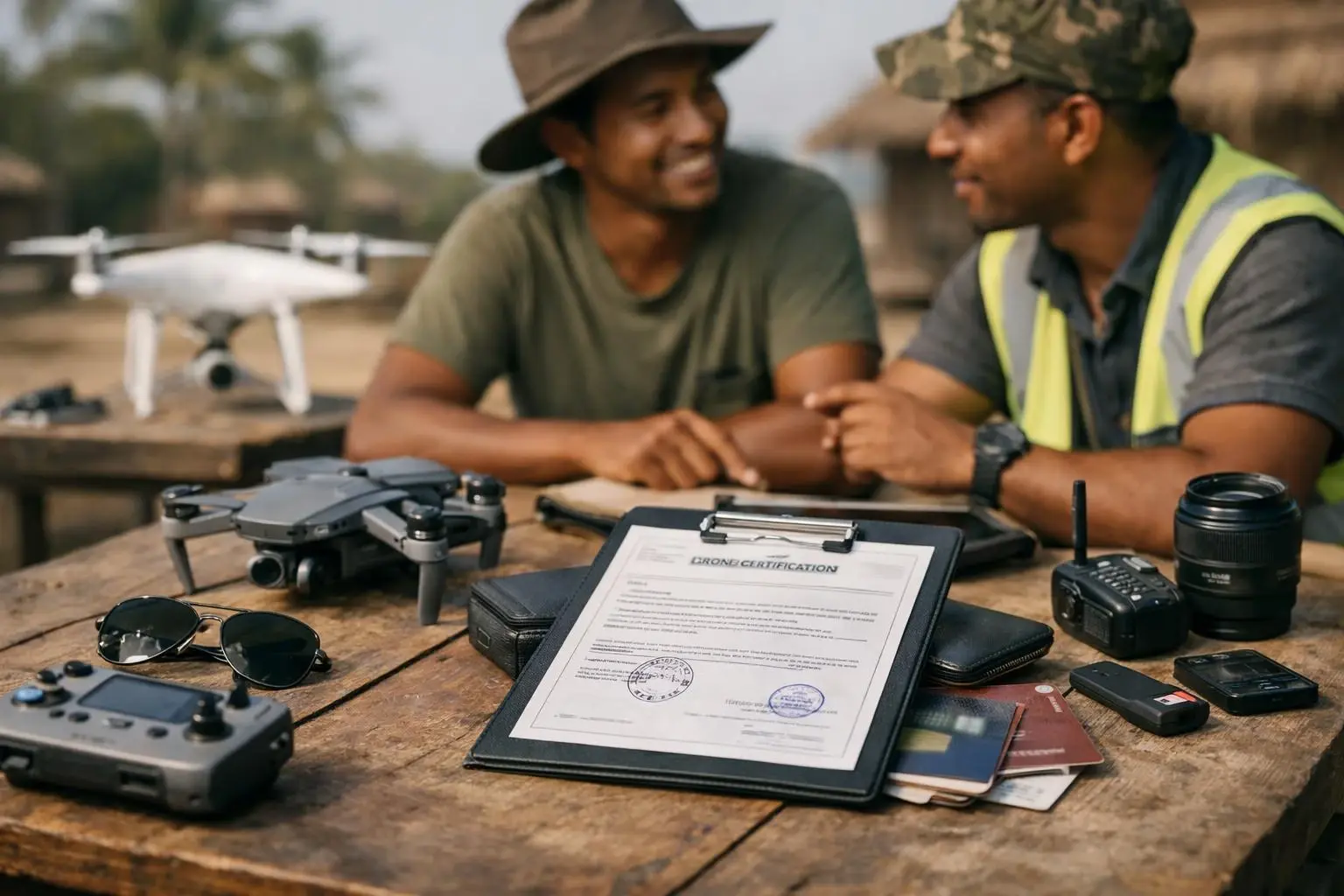
Drone certification is a formal recognition that a drone pilot has met the legal and safety requirements set by aviation authorities. It's not optional for commercial work, including film production, aerial surveys. Or inspections. Certification typically involves studying aviation regulations, airspace rules, weather effects. And emergency protocols. Pilots must pass both written and practical exams to demonstrate competence.
In many countries, certification is issued by national aviation bodies, such as the Federal Aviation Administration (FAA) in the United States or the Civil Aviation Authority (CAA) in the United Kingdom. The process ensures that drone operators understand how to fly safely, avoid collisions. And respect privacy and environmental laws. Without certification, commercial drone use is illegal and can result in fines, confiscation of equipment. Or legal action.
The certification process usually begins with online or in-person training. Pilots study topics such as airspace classifications, flight restrictions, weather patterns. And drone performance limits. After completing the training, they must pass a written knowledge test covering these areas. Following the written exam, some authorities require a practical flight assessment where the pilot demonstrates safe takeoff, landing, navigation. And emergency response.
Once certified, pilots receive a license or certificate that may need renewal every few years. Some authorities also require operators to register their drones separately. Certification often includes specific limitations, such as maximum altitude, distance from people. And daylight-only operations, unless additional permissions are obtained.

Drone certification protects public safety, privacy. And airspace integrity. Uncertified pilots pose risks to aircraft, people on the ground. And property. Certification ensures that operators know how to avoid restricted areas, such as airports, military bases. And national parks. It also promotes responsible behavior, such as obtaining permits for filming in sensitive locations and respecting wildlife and cultural sites.
In practice, For film productions, certification is often required to secure insurance, filming permits. And access to locations. Production companies and insurers typically require proof of certification before approving drone work. Certified pilots are also more likely to deliver high-quality footage safely, reducing the risk of accidents that could delay production or result in costly liability claims.
Drone certification is critical whenever drones are used for commercial purposes, including film production, advertising, news gathering. Or industrial inspections. It is especially important when flying in urban areas, near crowds. Or in controlled airspace. Many film commissions and location managers require proof of certification before issuing filming permits.
Certification also matters when working with clients, insurers. Or government agencies. Productions may be halted or fined if uncertified pilots are used. And certification may be required to export or share drone footage internationally, as some countries require proof of legal operation before accepting aerial content.
Certification is not just a legal requirement—it reflects a pilot’s professionalism and commitment to safety. Always verify certification status before hiring a drone operator, especially in high-risk environments like urban or wildlife filming.
A certified pilot filmed a park for a documentary. They got permits and flew low. This kept wildlife safe. The shoot had no legal trouble.
PRO FIXERS MADAGASCAR
Contact PRO FIXERS MADAGASCAR for practical guidance on Drone certification and related film production madagascar work in Madagascar.