ISO film speed is a number that shows how sensitive film is to light. Higher numbers mean the film can work in dim light. They may look grainier. Lower numbers need more light but give sharper pictures. The International Organization for Standardization (ISO) sets this number. It helps film crews pick the right settings.
Term
ISO film speed
Category
Definition
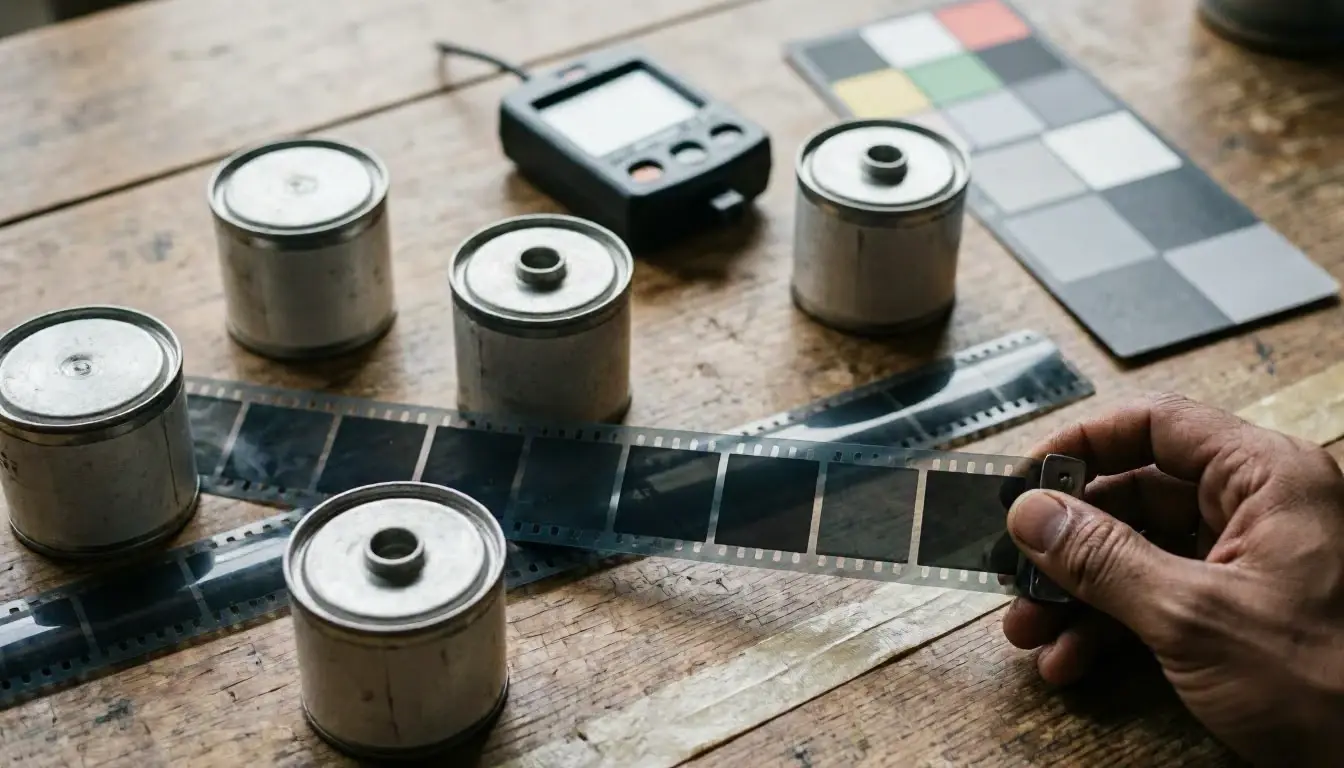
ISO film speed is a critical concept in film photography that determines how sensitive a roll of film is to light. The term "ISO" stands for the International Organization for Standardization, which sets the standard for this measurement. Film with a higher ISO number, such as ISO 800 or ISO 1600, is more sensitive to light, making it ideal for low-light situations like indoor or nighttime shooting. But this increased sensitivity comes at a cost—higher ISO films often produce images with more visible grain, which can reduce overall sharpness and detail.
Conversely, lower ISO films, such as ISO 100 or ISO 200, require more light to properly expose an image but deliver finer grain and greater clarity. These films are typically used in bright outdoor settings or when a photographer wants the highest possible image quality. Understanding ISO film speed is essential for selecting the right film for a given shooting environment, as it directly impacts exposure settings like shutter speed and aperture. Unlike digital cameras, where ISO can be adjusted on the fly, film photographers must choose their ISO when loading the film, making this decision a key part of pre-production planning.
ISO film speed works by quantifying the chemical sensitivity of the light-sensitive emulsion coated on photographic film. When light hits the film, it triggers a chemical reaction in the emulsion, creating a latent image that becomes visible after development. Films with higher ISO ratings contain larger silver halide crystals, which react more quickly to light. So you can the film to capture images in dimmer conditions but also results in a coarser grain structure, as the larger crystals are more visible in the final image.
The ISO rating is determined through standardized testing methods outlined by the International Organization for Standardization. During testing, a film's sensitivity is measured under controlled lighting conditions. And the results are used to assign an ISO number. This number is then printed on the film packaging and is used by photographers to calculate proper exposure settings. For example, a film with an ISO of 400 is twice as sensitive to light as one with an ISO of 200, meaning it requires half as much light to achieve the same exposure. This relationship is logarithmic. So each doubling of the ISO number represents a doubling of the film's sensitivity.
In practice, photographers use the ISO film speed in conjunction with the camera's light meter to determine the correct combination of shutter speed and aperture. For instance, if a light meter suggests an exposure of 1/60th of a second at f/8 for ISO 100 film, switching to ISO 400 film would allow the photographer to use either a faster shutter speed (1/250th of a second at f/8) or a smaller aperture (1/60th of a second at f/16) to achieve the same exposure. This flexibility is particularly useful in challenging lighting conditions, such as fast-moving subjects or low-light environments.

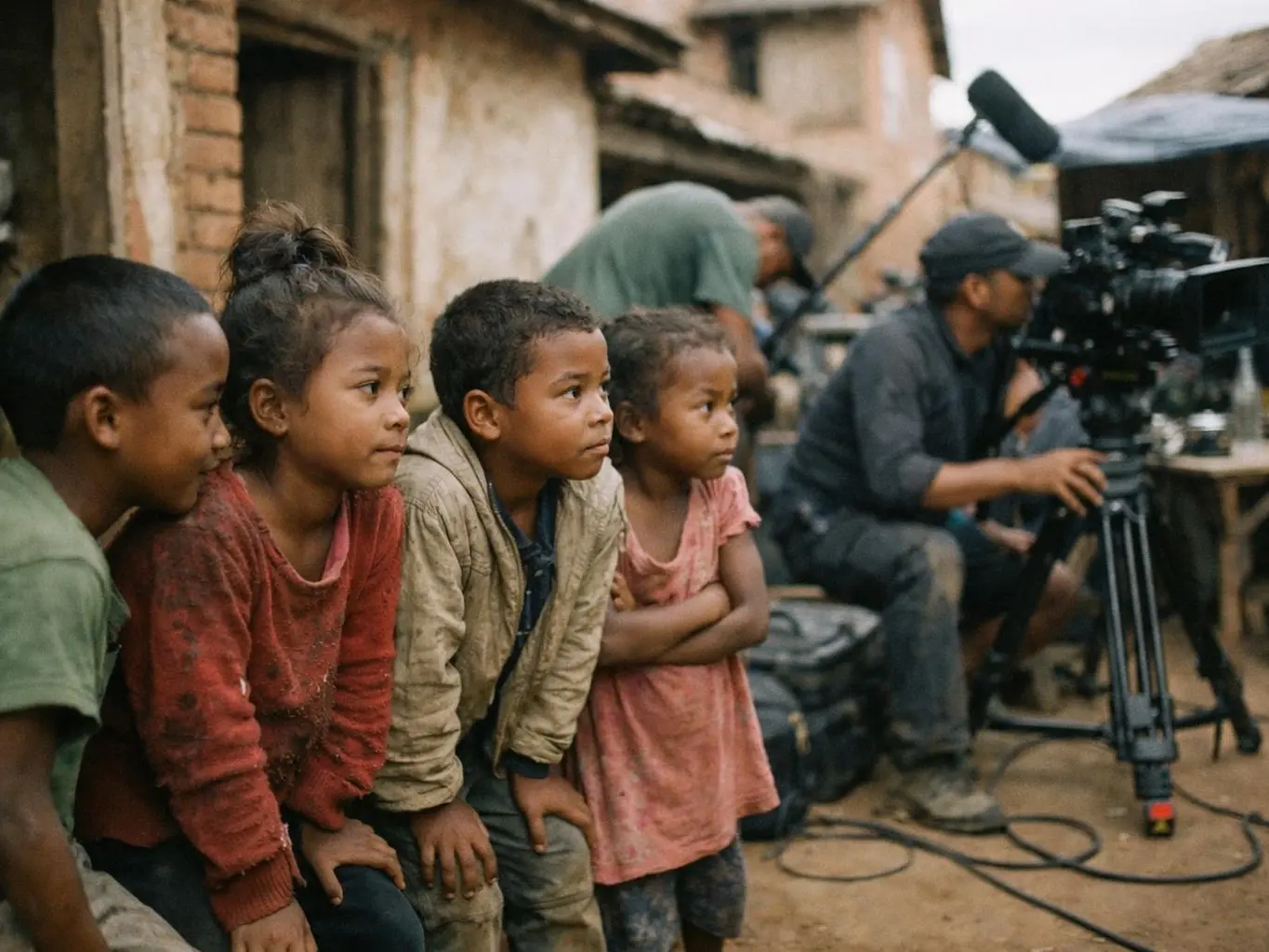
ISO film speed matters because it directly influences the technical and creative possibilities of a film shoot. Choosing the right ISO allows photographers to achieve proper exposure in a variety of lighting conditions, ensuring that images are neither too dark nor too washed out. For example, a documentary filmmaker shooting in a dimly lit market in Antananarivo might opt for a higher ISO film to avoid underexposure. While a scene photographer capturing Madagascar's bright coastal scenes might choose a lower ISO to preserve fine details and vibrant colors. The ISO rating also affects the aesthetic quality of the image, with higher ISO films introducing grain that can add texture or mood to a scene. While lower ISO films deliver crisp, clean images ideal for high-resolution prints or commercial work.
Beyond exposure and image quality, ISO film speed plays a practical role in production planning. Since film photographers can't change ISO mid-roll, selecting the appropriate film speed upfront is essential for avoiding costly reshoots or missed opportunities. For instance, a wildlife filmmaker in Madagascar's national parks may need to balance the need for fast shutter speeds to capture moving animals with the desire for fine-grained images. Understanding the trade-offs of ISO film speed helps crews make informed decisions about equipment, lighting. And shooting schedules, ultimately saving time and resources on set.
ISO film speed becomes particularly important in situations where lighting conditions are unpredictable, limited. Or rapidly changing. For example, documentary filmmakers working in remote locations, such as Madagascar's rainforests or rural villages, often face inconsistent lighting and may need to rely on higher ISO films to adapt to low-light environments without sacrificing mobility. Similarly, event photographers covering indoor ceremonies or nighttime festivals must balance the need for fast shutter speeds to freeze motion with the limitations of available light, making ISO film speed a critical factor in their workflow.
In practice, ISO film speed also matters in controlled studio settings, where photographers may prioritize image quality over flexibility. For instance, commercial shoots for advertisements or fashion projects often use lower ISO films to achieve the sharpest, most detailed images possible. In these cases, additional lighting equipment is used to compensate for the film's lower sensitivity, allowing photographers to maintain creative control over depth of field and exposure. And ISO film speed is a key consideration when shooting with older or manual cameras, where modern features like auto-exposure or digital ISO adjustments are not available. Understanding how to select and use the right ISO film ensures consistent results across different types of equipment and shooting conditions.
While ISO film speed is a fixed property of the film, its impact on exposure and image quality can vary depending on development techniques. Push or pull processing can alter the effective sensitivity of the film, allowing some flexibility even after shooting. However, these methods also affect grain and contrast. So they should be used judiciously and tested in advance.
A crew films in Madagascar’s Isalo National Park. Light changes fast as clouds move. They pick ISO 400 film. This gives enough light help but keeps grain low for clear footage.
PRO FIXERS MADAGASCAR
Contact PRO FIXERS MADAGASCAR for practical guidance on ISO film speed and related film production madagascar work in Madagascar.