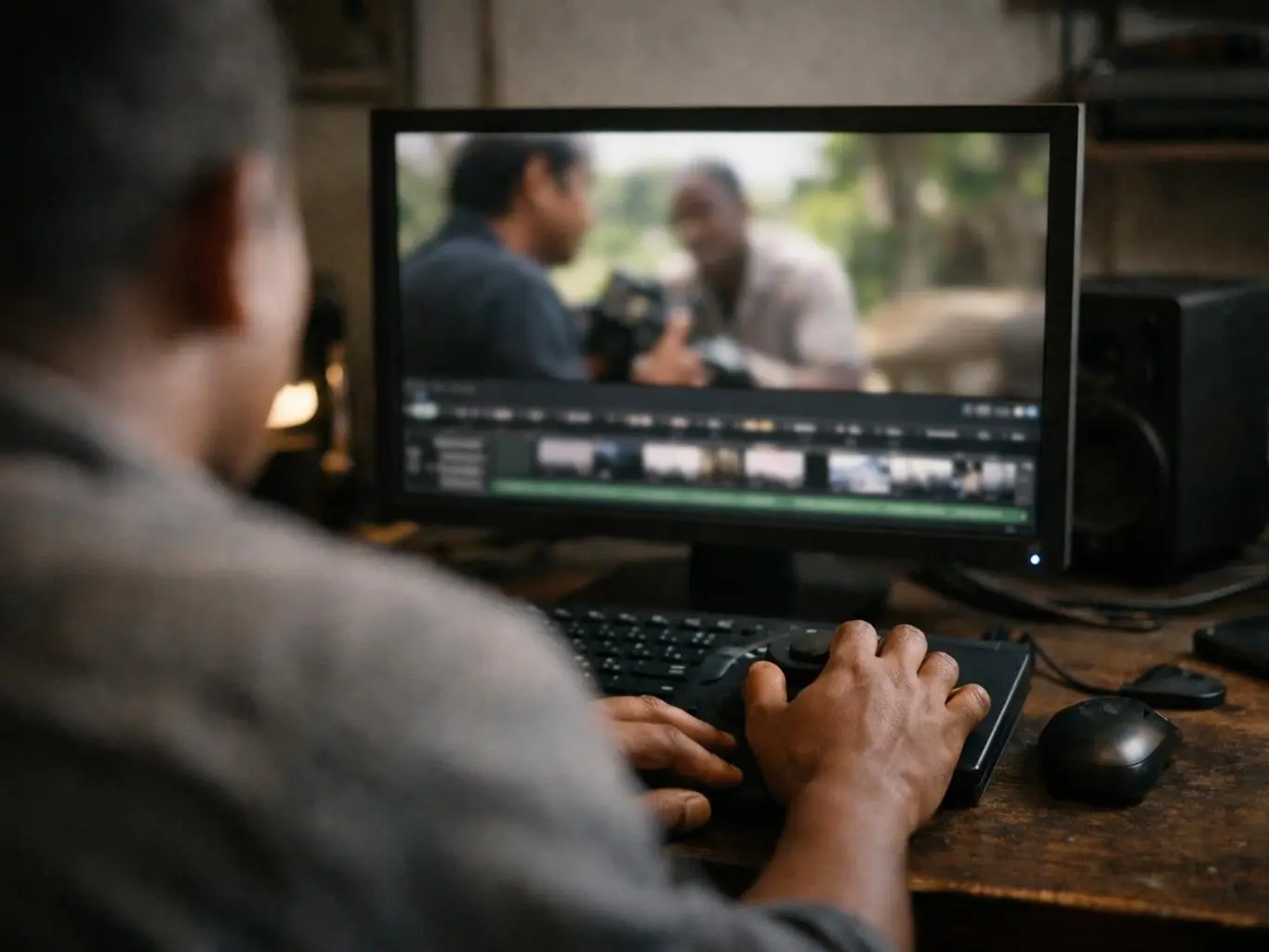
ADR is automated dialogue replacement, a post-production process where actors re-record their lines in a controlled studio environment to improve audio clarity, correct mistakes. Or adjust performance. ADR ensures dialogue matches the original film or video footage while enhancing sound quality for final delivery.
Category
Post-production audio technique
Used for
Dialogue clarity, dubbing. And performance adjustments
Common confusion
Often mistaken for original on-set sound recording
Also called
Automated Dialogue Replacement, Dialogue looping
Often discussed with
Sound Recording Services, Post production Video Editing Service

ADR is a key step in making films, TV shows. And videos. It happens after filming is done. Sometimes, background noise or bad mic placement ruins the dialogue. ADR lets filmmakers re-record lines in a quiet studio.
Related glossary terms: Direct sound recording, Foley artist, Post-production supervisor.
This makes the audio clear and easy to understand. It also matches what you see on screen. ADR isn't just for fixing mistakes. It helps change how an actor says a line or adds emotion that was missing.
ADR is different from voice-over or narration. Voice-over adds new lines that don't match the action. But ADR replaces existing dialogue. It keeps the words in sync with the actor's lips.
This sync is called "lip-sync." It's important for making the scene feel real. If the timing's off, the ADR won't look natural. It can pull viewers out of the story.
The ADR process starts by checking the footage. A sound editor finds bad dialogue lines. They make a list of lines to re-record, called "ADR cues." Actors come to a studio with good mics and screens.
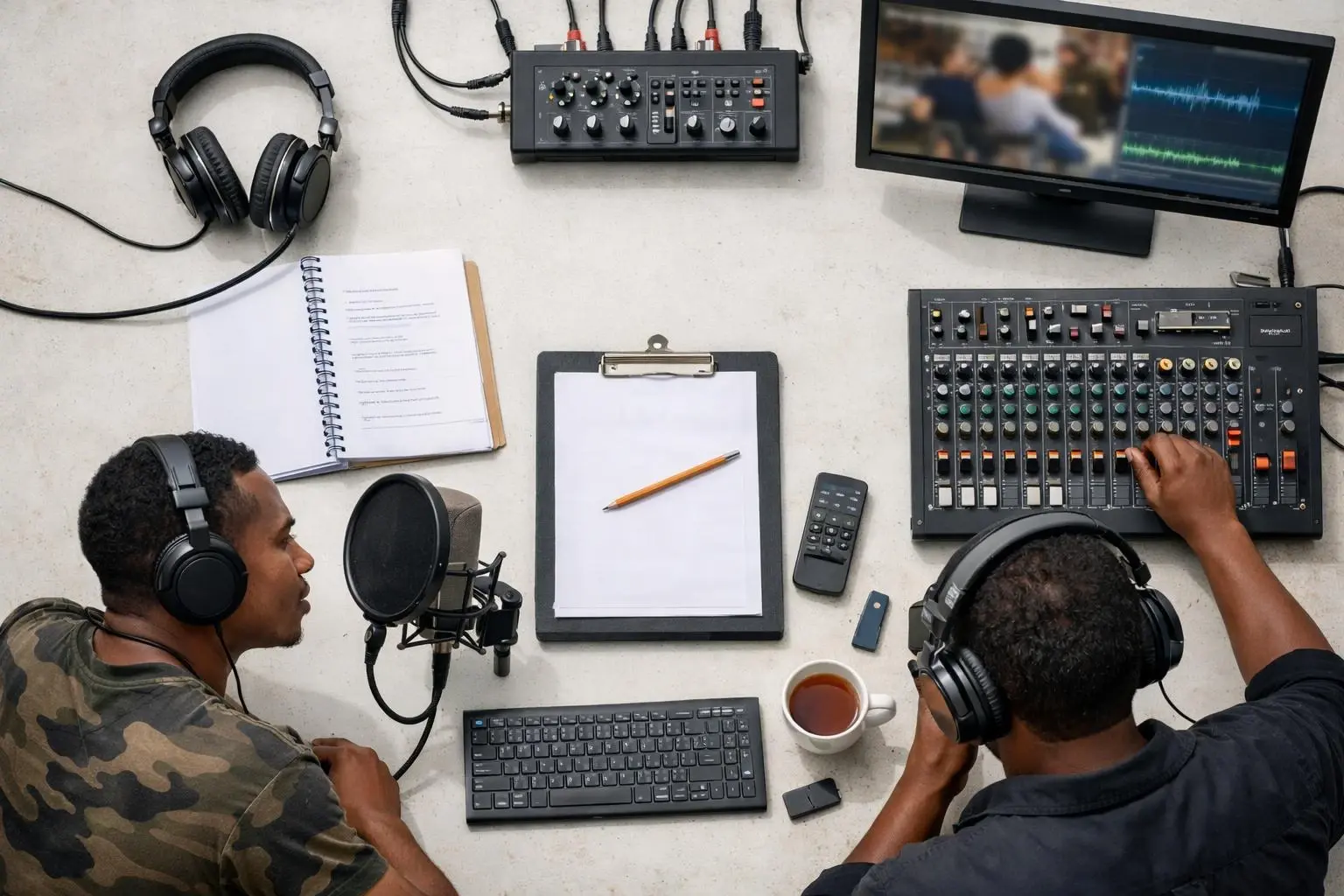
The actor watches the scene. They listen to the original audio through headphones. Then they say their lines again to match the timing.
After recording, engineers edit the new audio. They adjust pitch, tone. And timing. This makes the new lines blend with the rest of the sound. They also add room tone or background noise.
This keeps the sound consistent with the original set. Finally, they mix the ADR with music and sound effects. This creates the full soundtrack.
ADR helps make audio sound professional. Bad dialogue can distract viewers. It can ruin the story or hide important plot points. ADR fixes these problems.
It lets viewers focus on the story. They won't get pulled out by bad audio. ADR also helps with dubbing for international audiences. Actors re-record lines in other languages.
They keep the lip-sync so it looks natural. ADR isn't just for fixing mistakes. It gives filmmakers more creative control. Directors and actors can try new ways to say lines.
They can change dialogue to fit the story better. This is really helpful in action or fantasy movies. On-set conditions often limit sound quality. Without ADR, many films wouldn't meet audio standards.
ADR is most needed when on-set audio is bad. It's also used for creative changes. For example, outdoor scenes may have wind or traffic noise. ADR fixes this without reshooting.
It saves time and money. ADR is also used for dubbing. This is important for international films or streaming shows. It keeps the original performance's meaning.
Big-budget films and theater releases need perfect audio. Even small audio problems can ruin the experience. ADR makes sure the sound is professional. It's also used in documentaries.
Interviews or narration may need re-recording. Background noise or technical issues can cause problems. ADR fixes these too.
Voice-over involves recording new dialogue unrelated to on-screen action. While ADR replaces existing dialogue to maintain lip-sync.
Foley adds sound effects like footsteps or rustling clothes, whereas ADR focuses on re-recording dialogue.
Direct sound recording captures audio on set. While ADR re-records dialogue in post-production to fix or enhance it.
ADR isn’t just about fixing mistakes—it’s an opportunity to refine performances. Even experienced actors benefit from re-recording lines in a controlled environment, allowing for subtle adjustments that elevate the final product.
During the filming of a historical drama in Madagascar, strong winds disrupted dialogue recordings in outdoor scenes. The production team used ADR to re-record the affected lines in a studio, ensuring the final audio was clear and synchronized with the actors' performances. This step was crucial for maintaining the film's immersive quality.
Direct sound recording grabs audio on set while filming. Mics and recorders catch live talk and sounds. This keeps the real sound clear. It cuts the need for later voice work.
Foley artist is foley artists are specialized sound professionals who create and record custom sound effects for films, television shows. And other media. Foley artists perform sounds synchronously with on-screen action—such as footsteps, rustling clothes.
Post-production supervisor is a senior role responsible for overseeing all technical and creative stages after filming ends, including editing, sound design, visual effects, color grading. And final delivery. Post-production supervisors coordinate teams, manage budgets.
Timecode is an electronic signal or digital metadata that assigns a unique numerical address to each frame of video or audio, formatted as hours:minutes:seconds:frames. Timecode enables precise synchronization of cameras, sound recorders.
PRO FIXERS MADAGASCAR
Contact PRO FIXERS MADAGASCAR for practical guidance on ADR and related film production madagascar work in Madagascar.