Aerial cinematography is the practice of capturing moving images from elevated perspectives using aircraft, drones. Or other airborne platforms. It involves specialized cameras, stabilization systems. And skilled operators to film scenes that ground-based equipment can't reach, such as sweeping landscapes, dynamic action sequences. Or large-scale events. This technique enhances visual storytelling by providing unique angles and immersive views.
Category
Film production technique
Used for
Landscape shots, action scenes, large events
Common confusion
Often mistaken for ground-based crane shots
Also called
Aerial filming, Drone cinematography
Often discussed with
Drone Operator & Aerial filming, Filming Equipment rental
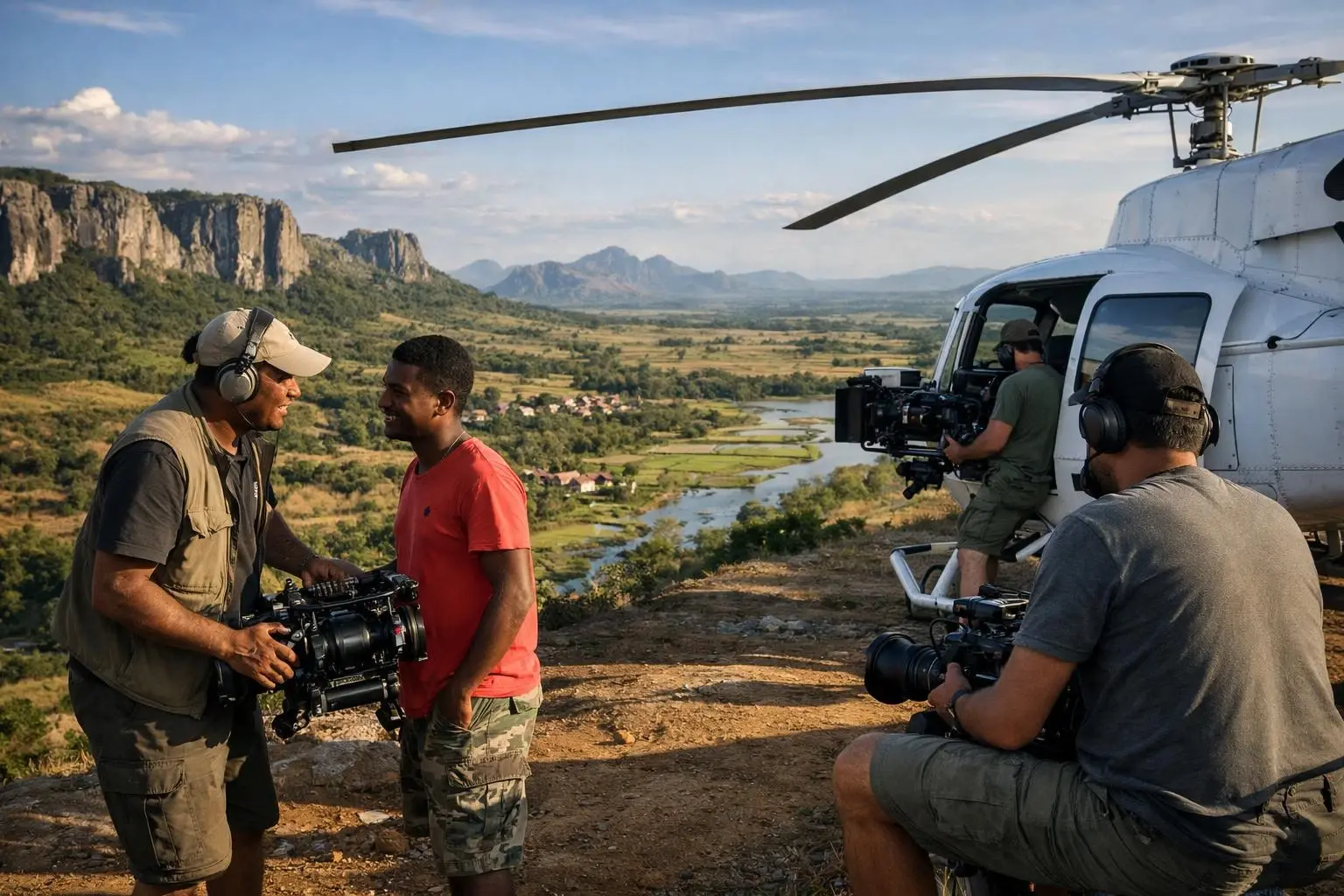
Aerial cinematography transforms filmmaking by allowing creators to capture footage from perspectives that ground-based cameras simply can't achieve. Whether soaring over vast landscapes, tracking fast-moving subjects. Or revealing the scale of a scene, aerial shots add depth and dynamism to visual storytelling. This technique is widely used in feature films, documentaries, commercials. And even news broadcasts to create memorable, engaging content.
Related glossary terms: Drone certification, Gimbal, Camera stabilizer.
The equipment used in aerial cinematography has evolved significantly over the years. Early methods relied on helicopters, airplanes. Or large cranes, which were expensive and required extensive planning. Today, drones equipped with high-resolution cameras and stabilization systems have democratized aerial filming, making it more accessible and cost-effective. But professional-grade aerial cinematography still demands expertise in both piloting and camera operation to ensure smooth, high-quality footage.
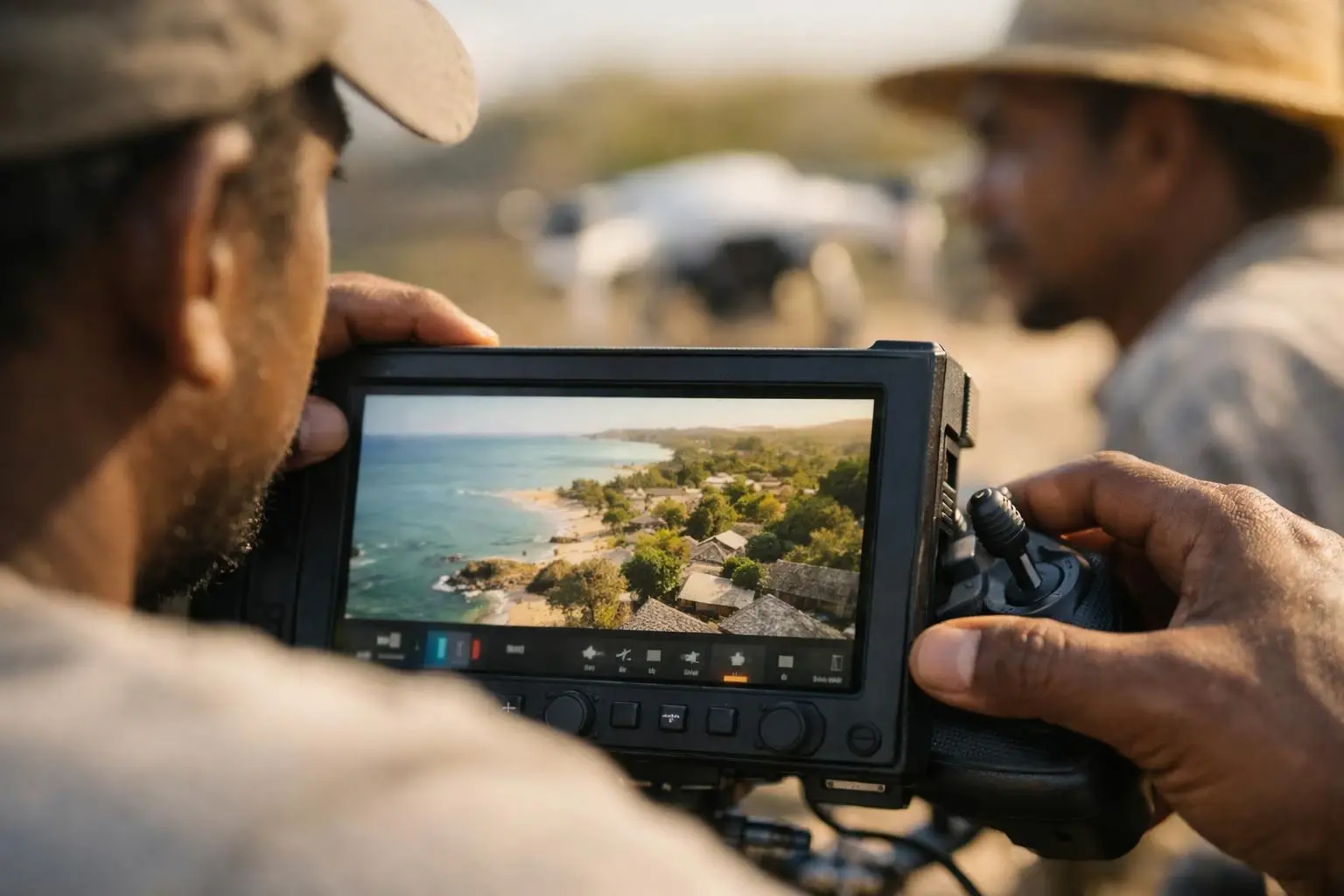
Aerial cinematography typically involves three key components: the airborne platform, the camera system. And the operator. The platform—whether a drone, helicopter. Or crane—carries the camera into the air. While the camera system captures the footage. Modern cameras used in aerial cinematography are often lightweight yet capable of recording in high resolution, such as 4K or even 8K, to maintain clarity when filming from a distance. Stabilization systems, like gimbals, are essential to counteract the movement of the platform and keep the footage steady.
The workflow for aerial cinematography begins with pre-production planning, where the creative team identifies the shots needed and assesses the feasibility of capturing them from the air. This includes scouting locations, obtaining necessary permits. And ensuring compliance with local regulations. During filming, the pilot and camera operator work in tandem to execute the shots, often using remote controls or pre-programmed flight paths for drones. Post-production involves editing the footage, color grading. And integrating it smoothly with ground-based shots to create a cohesive final product.
Safety is a critical consideration in aerial cinematography. Operators must adhere to regulations governing airspace, altitude limits. And flight paths, particularly when filming near populated areas or sensitive locations. For example, drones are typically restricted from flying over crowds or within certain distances of airports. Professional aerial cinematographers undergo training and certification to ensure they can operate equipment safely and legally.
Aerial cinematography plays a vital role in modern filmmaking by expanding the creative possibilities for directors and cinematographers. It allows filmmakers to convey scale, movement. And emotion in ways that ground-based shots cannot. For instance, aerial footage can emphasize the isolation of a character in a vast scene, highlight the grandeur of a natural wonder. Or capture the intensity of a chase scene. These visuals can improve a project, making it more immersive and engaging for audiences.
Beyond creative benefits, aerial cinematography can also be a practical solution for filming in challenging environments. In locations with difficult terrain, such as dense forests, mountains. Or bodies of water, aerial platforms can access areas that would otherwise be impossible or dangerous for a crew to reach. This versatility makes aerial cinematography a valuable tool for documentaries, travel films. And even scientific research, where capturing footage from above can provide unique insights.
Aerial cinematography is particularly important in projects where visual impact and storytelling depend on capturing large-scale or dynamic scenes. For example, nature documentaries often rely on aerial shots to showcase the beauty and vastness of landscapes. While action films use them to create thrilling sequences. Commercials and promotional videos also benefit from aerial footage, as it can make a product, location. Or event appear more impressive and memorable.
In Madagascar, aerial cinematography is especially valuable due to the country's diverse and breathtaking landscapes. From the lush rainforests of Andasibe to the otherworldly limestone formations of Tsingy de Bemaraha, aerial shots can capture the unique beauty and scale of Madagascar's natural wonders. And aerial filming is useful for documenting cultural events, wildlife. And large gatherings, where ground-based cameras might miss the full scope of the scene. But filmmakers must navigate local regulations and obtain the necessary permits to ensure their aerial operations are legal and safe.
Cost and logistics are also key considerations when deciding whether to use aerial cinematography. While drones have made aerial filming more affordable, professional-grade equipment and experienced operators can still represent a significant investment. Filmmakers must weigh the creative and practical benefits against the budget and timeline of their project to determine if aerial cinematography is the right choice.
Drone photography focuses on still images. While aerial cinematography captures moving footage for film or video.
Crane shots are filmed from elevated ground positions, whereas aerial cinematography uses airborne platforms like drones or helicopters.
Aerial cinematography requires balancing creative vision with technical precision. Even slight turbulence or incorrect camera settings can ruin a shot. So rehearsals and backup plans are essential for professional results.
In a wildlife documentary about Madagascar’s lemurs, aerial cinematography was used to film vast stretches of the island’s rainforests. Drones captured sweeping shots of the canopy, revealing the scale of the habitat and the lemurs’ movements between trees. These aerial perspectives provided viewers with a deeper understanding of the animals’ environment, complementing ground-level footage of their behavior.
Drone certification is a legal check. It shows a pilot can fly safely. Pilots take tests on rules and skills. They learn how to handle emergencies. This keeps people and places safe.
Gimbal is a motorized mechanical device designed to stabilize cameras, drones. Or other equipment by maintaining a steady, level orientation regardless of movement. Gimbals use sensors and brushless motors to counteract unwanted vibrations, tilts. Or shakes, allowing smooth footage even during dynamic shots like walking, running. Or vehicle mounts. They're essential tools in professional filmmaking, videography.
A camera stabilizer cuts shakes and bumps while filming. It keeps video smooth. This helps when you walk, run. Or ride. The shots stay steady even in rough places.
Commercial filming permit is commercial filming permits are official authorizations issued by government or local authorities allowing professional film crews to record video, photography. Or sound for paid projects in regulated areas. These permits ensure legal compliance, public safety.
PRO FIXERS MADAGASCAR
Contact PRO FIXERS MADAGASCAR for practical guidance on Aerial cinematography and related film production madagascar work in Madagascar.