A camera stabilizer cuts shakes and bumps while filming. It keeps video smooth. This helps when you walk, run. Or ride. The shots stay steady even in rough places.
Category
Filmmaking equipment
Used for
Smooth, shake-free video in motion
Common confusion
Gimbals (electronic) vs. Steadicams (mechanical)
Also called
Stabilizer, Camera stabilisation system
Often discussed with
Filming Equipment rental, Drone Operator & Aerial filming
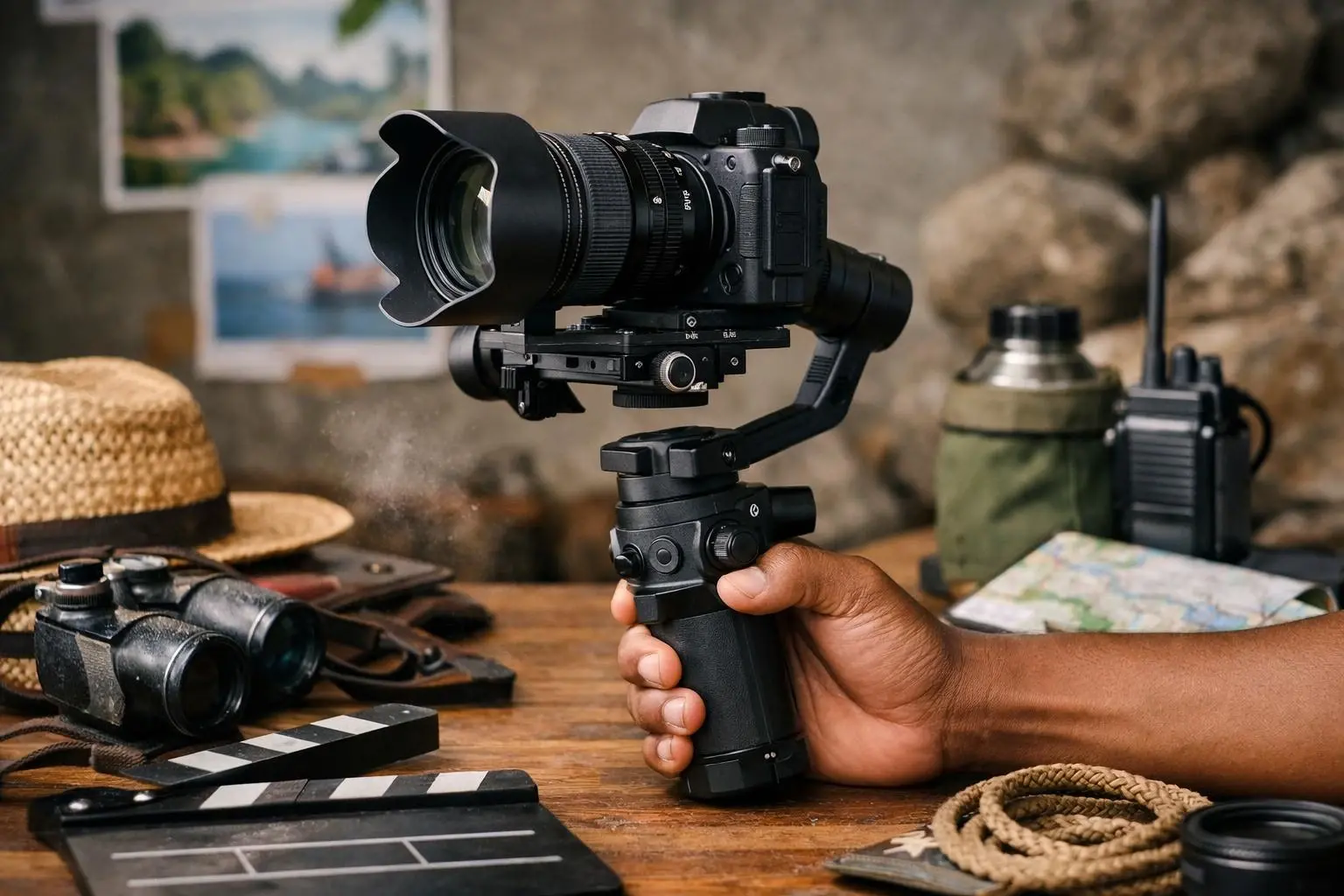
A camera stabilizer is a tool used in filmmaking and video production to maintain steady footage while the camera is in motion. Without a stabilizer, handheld shots or those taken from moving vehicles often appear shaky and unprofessional. Stabilizers counteract these movements by absorbing vibrations, allowing the camera to remain level and smooth. They're widely used in documentaries, action scenes. And live events where mobility is required but stability is critical.
Related glossary terms: Gimbal, Drone certification, Aerial cinematography.
Common options include two main types of camera stabilizers: mechanical and electronic. Mechanical stabilizers, such as steadicams, use counterweights and physical balance to keep the camera steady. These require manual operation and are often favored for their reliability and lack of battery dependence. Electronic stabilizers, like gimbals, use motors and sensors to detect and correct movement in real time. These are lighter and more compact but rely on power sources and calibration for optimal performance.
Mechanical stabilizers, such as steadicams, work by distributing the weight of the camera across a balanced arm and vest system. The operator wears the vest, which supports the arm holding the camera. The counterweights at the base of the arm absorb sudden movements, allowing the camera to float smoothly. This setup is ideal for long takes or complex movements, such as walking through crowds or climbing stairs, where electronic stabilizers might struggle with balance or battery life.
A practical next step is Electronic stabilizers. Or gimbals, use brushless motors and gyroscopic sensors to detect and counteract movement. The motors adjust the camera’s position in real time, keeping it level even if the operator tilts or moves abruptly. Gimbals are often used for lightweight cameras and drones, where portability and precision are essential. But they require calibration before each use and can be affected by extreme temperatures or magnetic interference. Both types of stabilizers demand practice to master, as improper balance or technique can negate their benefits.
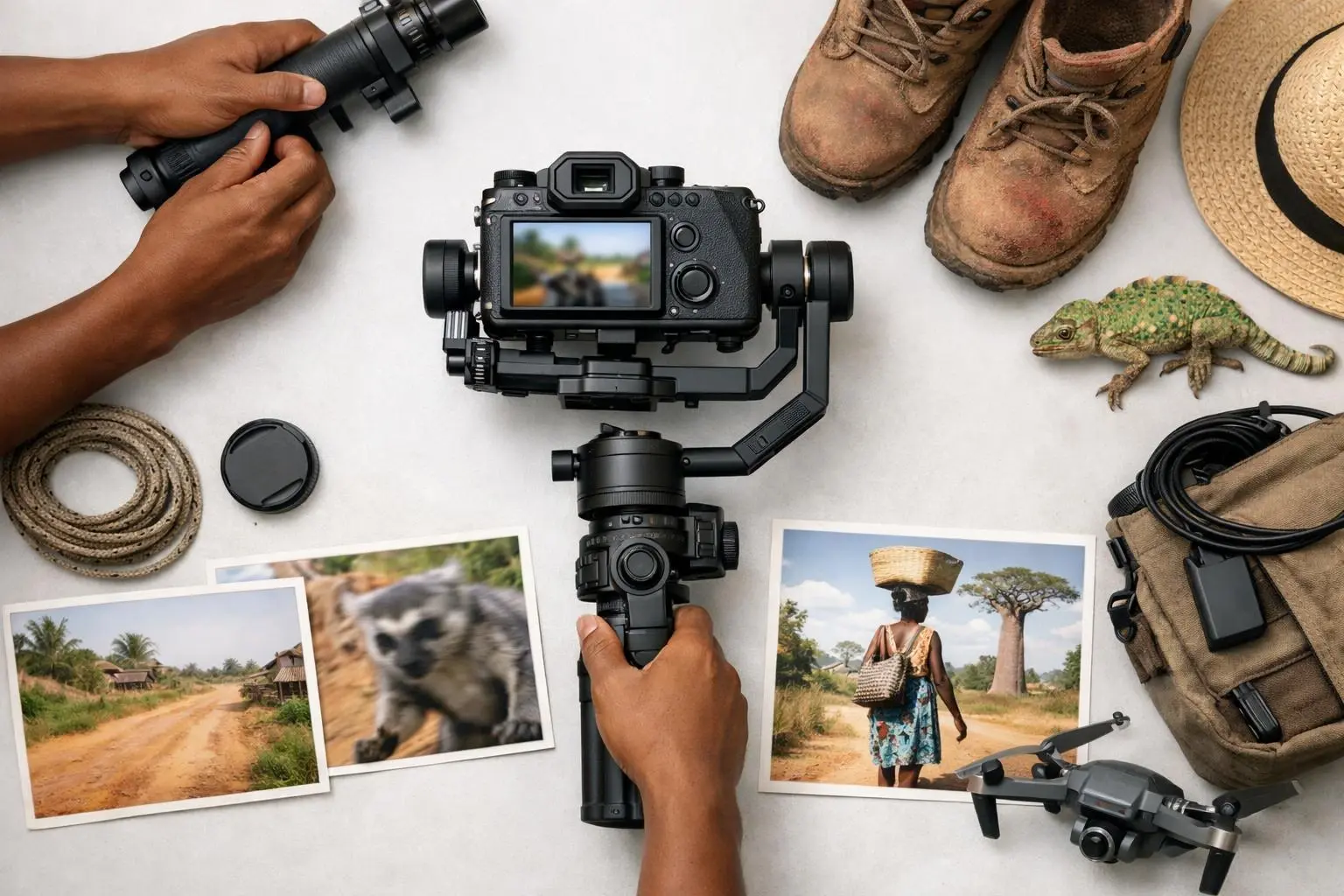
Camera stabilizers are essential for producing high-quality video, especially in dynamic or uncontrolled environments. Shaky footage can distract viewers, reduce production value. And make post-production tasks like color grading or editing more difficult. Stabilizers allow filmmakers to capture smooth, cinematic shots without relying on bulky tripods or dollies, which can limit mobility. This flexibility is particularly valuable in documentary filmmaking, where spontaneity and adaptability are key.
Beyond aesthetics, stabilizers also save time and resources during post-production. While software like Adobe Premiere Pro or Final Cut Pro offers stabilization tools, these often crop the footage or introduce artifacts, reducing image quality. Using a stabilizer during filming ensures cleaner, more professional results from the start. That means especially important for projects with tight deadlines or budgets, where extensive post-production fixes may not be feasible.
Camera stabilizers are most critical in scenarios where the camera must move freely while maintaining stability. For example, in action sequences, documentaries. Or live events, stabilizers allow operators to follow subjects smoothly without sacrificing shot quality. They are also invaluable for vehicle-mounted shots, such as car chases or travel vlogs, where vibrations from the road would otherwise ruin the footage. In wildlife filmmaking, stabilizers enable close-up shots of animals without disturbing them, as the operator can move quietly and steadily.
Stabilizers are also important in low-light conditions, where slower shutter speeds can exaggerate camera shake. By keeping the camera steady, stabilizers help avoid blurry images, allowing filmmakers to capture clear footage even in challenging lighting. And in projects where multiple cameras are used, stabilizers ensure consistency across shots, making it easier to match footage during editing. Whether for a blockbuster film or a corporate video, stabilizers improve the production value by delivering smooth, professional results.
A tripod holds the camera stationary for static shots. While a stabilizer allows smooth movement during filming.
A dolly moves the camera along tracks for smooth horizontal shots, whereas a stabilizer enables free, handheld movement in any direction.
A gimbal is a type of electronic stabilizer that uses motors and sensors. While mechanical stabilizers rely on counterweights and physical balance.
Mastering a stabilizer takes practice—focus on smooth, controlled movements rather than speed. Over-correcting or jerky motions can make footage worse than unassisted handheld shots. Always test your setup before critical takes.
A filmmaker in Madagascar’s rainforests uses a gimbal. The gimbal follows lemurs through thick trees. The camera stays steady on bumpy ground. It films close-ups without scaring the animals. Without it, the shots would look shaky.
Gimbal is a motorized mechanical device designed to stabilize cameras, drones. Or other equipment by maintaining a steady, level orientation regardless of movement. Gimbals use sensors and brushless motors to counteract unwanted vibrations, tilts. Or shakes, allowing smooth footage even during dynamic shots like walking, running. Or vehicle mounts. They're essential tools in professional filmmaking, videography.
Drone certification is a legal check. It shows a pilot can fly safely. Pilots take tests on rules and skills. They learn how to handle emergencies. This keeps people and places safe.
Aerial cinematography is the practice of capturing moving images from elevated perspectives using aircraft, drones. Or other airborne platforms. It involves specialized cameras, stabilization systems. And skilled operators to film scenes that ground-based equipment can't reach, such as sweeping landscapes, dynamic action sequences. Or large-scale events. This technique enhances visual storytelling by providing unique angles and immersive views.
Documentary filmmaking is a non-fiction filmmaking process that captures real-life events, people, places. Or issues to educate, inform. Or raise awareness. Unlike fictional films, it relies on factual content, interviews, archival footage.
PRO FIXERS MADAGASCAR
Contact PRO FIXERS MADAGASCAR for practical guidance on Camera stabilizer and related film production madagascar work in Madagascar.