Drone license is an official authorization issued by a civil aviation authority that permits an individual or organization to operate unmanned aerial vehicles (UAVs) for commercial, recreational. Or specialized purposes like film production. It ensures the operator understands airspace rules, safety protocols.
Category
Aviation certification
Used for
Commercial drone operations, aerial filming, inspections
Common confusion
Mistaking recreational drone rules for commercial licensing
Also called
Remote pilot certificate, UAV operator permit
Often discussed with
Drone Operator & Aerial filming, Film permit Application service
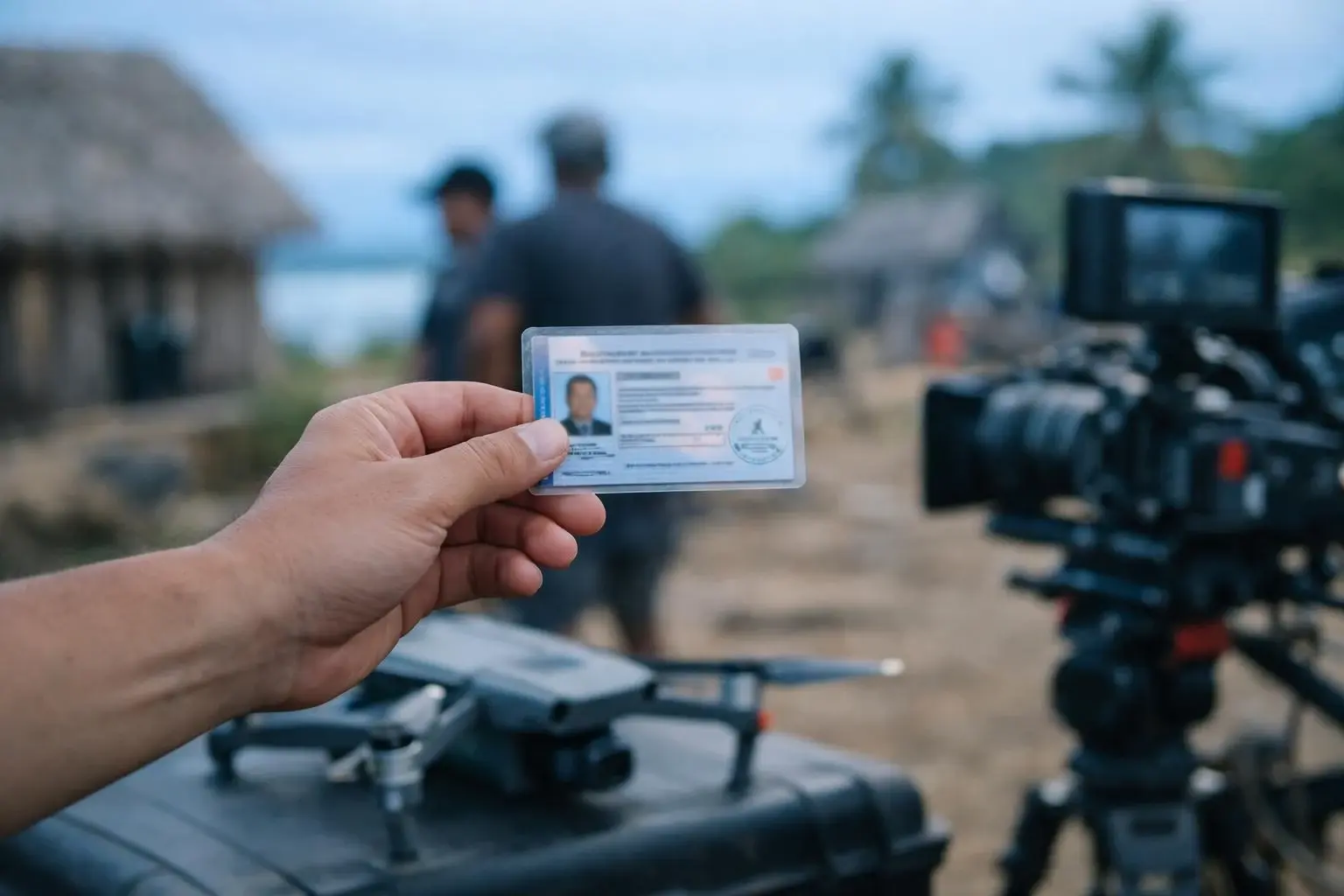
A drone license is a legal document. It's also called a remote pilot certificate or UAV operator permit. This license shows you've met a country's aviation rules. The rules are set by the civil aviation authority.
Related glossary terms: Drone certification, Drone flight plan, Commercial filming permit.
To get it, you must pass a written exam. The exam covers airspace rules and weather effects. It also includes emergency steps and privacy concerns. The license isn't just paperwork—it helps prevent crashes and accidents. It also stops unauthorized surveillance.
In most countries, you start by registering your drone. Then, you take training and pass a test. Some places also require a flight test or insurance proof. The goal is safe flights, especially near planes or crowds.
The licensing process varies by country. But most follow a similar structure. First, register your drone with the aviation authority. You'll need details like make, model. And serial number.
Next, study topics like airspace rules and weather. Learn about flight bans near airports. Also, study emergency landing steps. Then, take a written exam. It may be online or at a testing center.
After passing, you'll get your license. It often has a unique ID number. Some countries require more steps. These may include a background check or flight test. You must show you can control the drone safely.
The license usually expires. You'll need refresher training to renew it. Carry your license during every flight. Authorities may ask to see it.
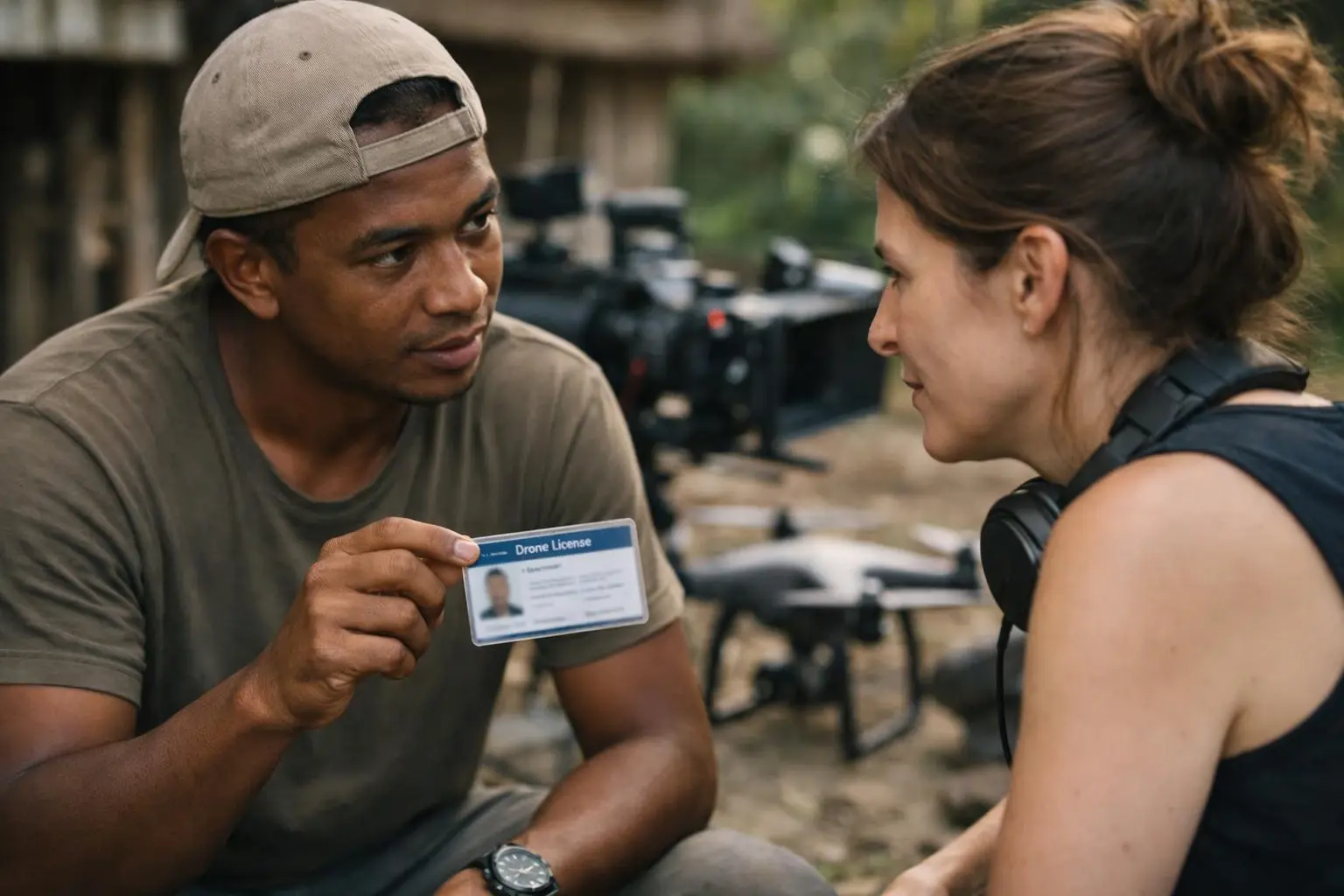
A drone license is key for professional drone use. This includes filmmakers, surveyors. Or inspectors. Without it, you risk fines or losing your drone.
A licensed pilot knows how to avoid dangers. These include power lines, wildlife. Or bad weather. This training cuts the chance of accidents. It protects people and property.
The license also builds trust with clients. For example, a film company will pick a licensed pilot. They know the pilot follows safety rules. Insurance companies may also ask for proof of licensing. This helps manage risks.
A drone license matters most for commercial use. This includes filming for movies or ads. It's also needed for surveys, inspections. Or farm checks.
In these jobs, drones often fly near people or airports. They may fly in controlled airspace. Without a license, you could face big fines or safety risks.
A license also helps when getting filming permits. Many countries require it. For example, Madagascar’s Civil Aviation Authority (ACM) asks for proof. The license shows you follow local laws.
Even in remote areas, a license proves professionalism. It shows you meet international safety standards. This can make getting permits easier for film crews.
Drone registration is the process of listing the drone with aviation authorities. While a drone license certifies the pilot’s knowledge and skills.
A film permit grants permission to shoot in a specific location. While a drone license certifies the pilot’s ability to fly legally and safely.
Recreational drone flying often has fewer regulations and may not require a license, unlike commercial operations.
A drone license is more than just a legal requirement—it reflects the operator’s commitment to safety and professionalism. In challenging environments like Madagascar, where weather and terrain can change quickly, a licensed pilot’s training can prevent costly accidents and delays.
A film crew in Madagascar needs aerial footage of a remote village for a documentary. The production company hires a drone operator with a valid drone license issued by Madagascar’s Civil Aviation Authority (ACM). During filming, the operator follows airspace rules, avoids flying over crowds. And secures the necessary filming permits. The license ensures the footage is captured safely and legally, avoiding fines or interruptions.
Drone certification is a legal check. It shows a pilot can fly safely. Pilots take tests on rules and skills. They learn how to handle emergencies. This keeps people and places safe.
A drone flight plan is a set path a drone flies. It has spots to go, how high, how fast. And where the camera points. It also has safety checks. This makes sure flights are safe and follow laws. It helps pilots miss things in the way and use battery well.
Commercial filming permit is commercial filming permits are official authorizations issued by government or local authorities allowing professional film crews to record video, photography. Or sound for paid projects in regulated areas. These permits ensure legal compliance, public safety.
Aerial cinematography is the practice of capturing moving images from elevated perspectives using aircraft, drones. Or other airborne platforms. It involves specialized cameras, stabilization systems. And skilled operators to film scenes that ground-based equipment can't reach, such as sweeping landscapes, dynamic action sequences. Or large-scale events. This technique enhances visual storytelling by providing unique angles and immersive views.
Film permit is film permits are official documents issued by government authorities that grant legal permission to film crews to conduct production activities in specific public or private locations. They ensure compliance with local laws, protect locations from unauthorized use. And outline conditions such as filming hours, equipment restrictions.
PRO FIXERS MADAGASCAR
Contact PRO FIXERS MADAGASCAR for practical guidance on Drone license and related film production madagascar work in Madagascar.