Three-point lighting is a standard film and photography lighting technique that uses three distinct light sources to illuminate a subject clearly and create depth. These lights—key light, fill light. And backlight—work together to reduce harsh shadows, highlight features.
Category
Lighting technique
Used for
Film, video, photography, interviews
Common confusion
Mixing up key, fill. And backlight roles
Also called
3-point lighting, key-fill-back lighting
Often discussed with
Filming Equipment rental
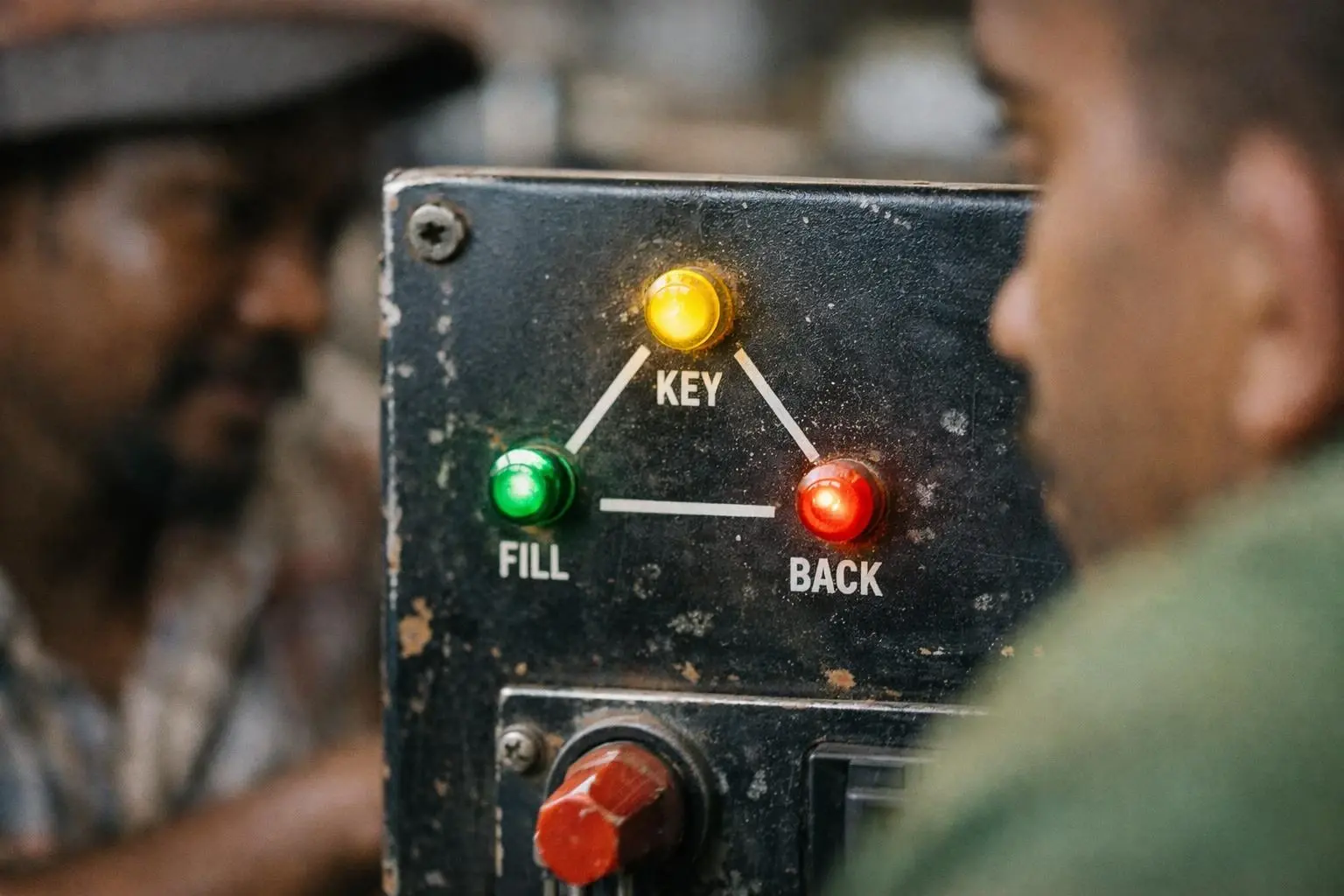
Three-point lighting helps filmmakers and photographers control how a subject looks. It uses three lights around the subject. This shapes features and cuts harsh shadows. It also adds depth to the image.
Related glossary terms: Cinematographer, Color grading, Depth of field.
Without good lighting, subjects can look flat or dark. They may even appear washed out. This makes it harder for viewers to focus on the story.
This method works almost anywhere. It fits indoor studios, outdoor spots. Or makeshift sets. Each light has a job. The key light shines the brightest. The fill light softens shadows. The backlight adds separation.
Together, they make the subject stand out. This works even against busy or dark backgrounds. The setup stays the same. But placement and brightness can change.
The key light is the brightest and most important. It sits to one side of the camera. It's usually at a 30 to 45-degree angle from the subject. This light shapes the subject's face or form.
It also creates the strongest shadows. Its position and brightness set the scene's tone. It can look dramatic, natural. Or soft.
The fill light goes on the opposite side of the key light. It's closer to the camera. Its job is to soften shadows. But it doesn't remove them completely.
Fill lights are usually softer and less bright. They're often diffused or bounced. The key-to-fill ratio sets the contrast. High contrast looks dramatic. Low contrast looks more natural.
The backlight sits behind the subject. It's often called a rim light or hair light. It shines toward the camera. This creates a thin highlight on the subject's edges.
It separates the subject from the background. This adds depth to the image. It stops the subject from blending into dark or similar backgrounds. All three lights work together to shape the final image.
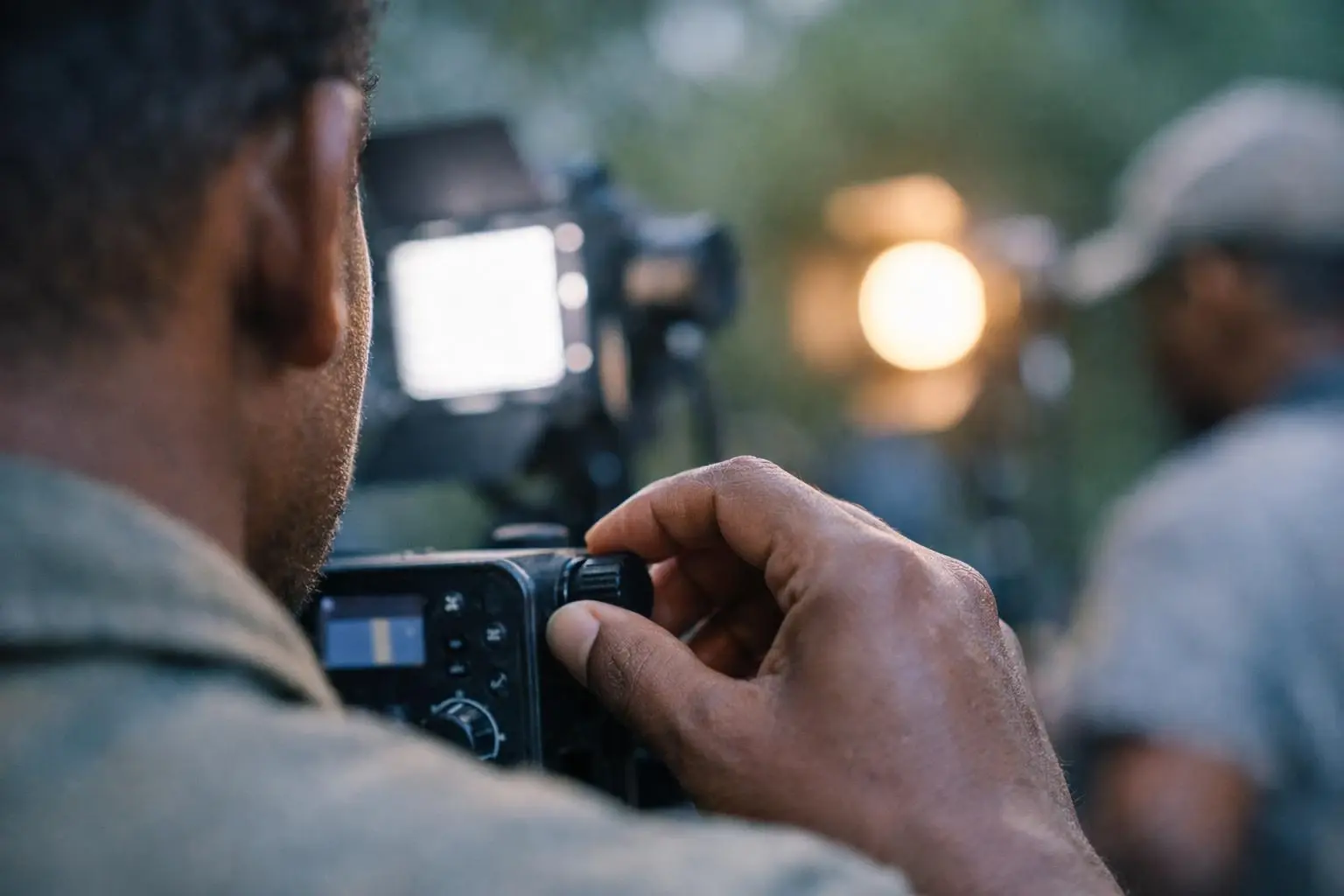
Three-point lighting does more than just set up lights. It changes how viewers see a scene. Good lighting makes subjects look professional and engaging.
Bad lighting can distract viewers. It can hide details or create the wrong mood. For example, harsh shadows can make someone look tired. Even lighting can make them seem friendly.
For local customers, this lighting also improves footage quality. Cameras work best with steady, even light. This gives sharper images and better colors.
This matters most in low-budget projects. Post-production fixes may be limited. Controlling light on set saves time and money. It helps with editing, color grading. And effects.
Three-point lighting is key for clear, professional videos. It's used in interviews, corporate videos. And documentaries. It makes sure subjects are well-lit and easy to see.
In Madagascar, natural light can be strong and change fast. This technique helps keep quality consistent. It works indoors, in shade. Or during golden hour.
It's also great for studios. Filmmakers can create a specific mood. A low-key setup with strong shadows works for drama. High-key lighting with soft light fits commercials.
Even in fast shoots, crews can adapt. They use portable lights or natural light. This helps them get similar effects quickly.
Natural lighting uses sunlight or ambient light. While three-point lighting uses controlled artificial lights for consistency and precision.
High-key lighting uses bright, even illumination with minimal shadows, often built on a three-point setup but with stronger fill and softer contrast.
Low-key lighting emphasizes shadows and contrast, often using a strong key light with little or no fill, unlike the balanced approach of three-point lighting.
The best three-point setups don’t draw attention to themselves. The goal is to make the lighting feel natural and invisible. So the audience focuses on the subject and story—not the technique.
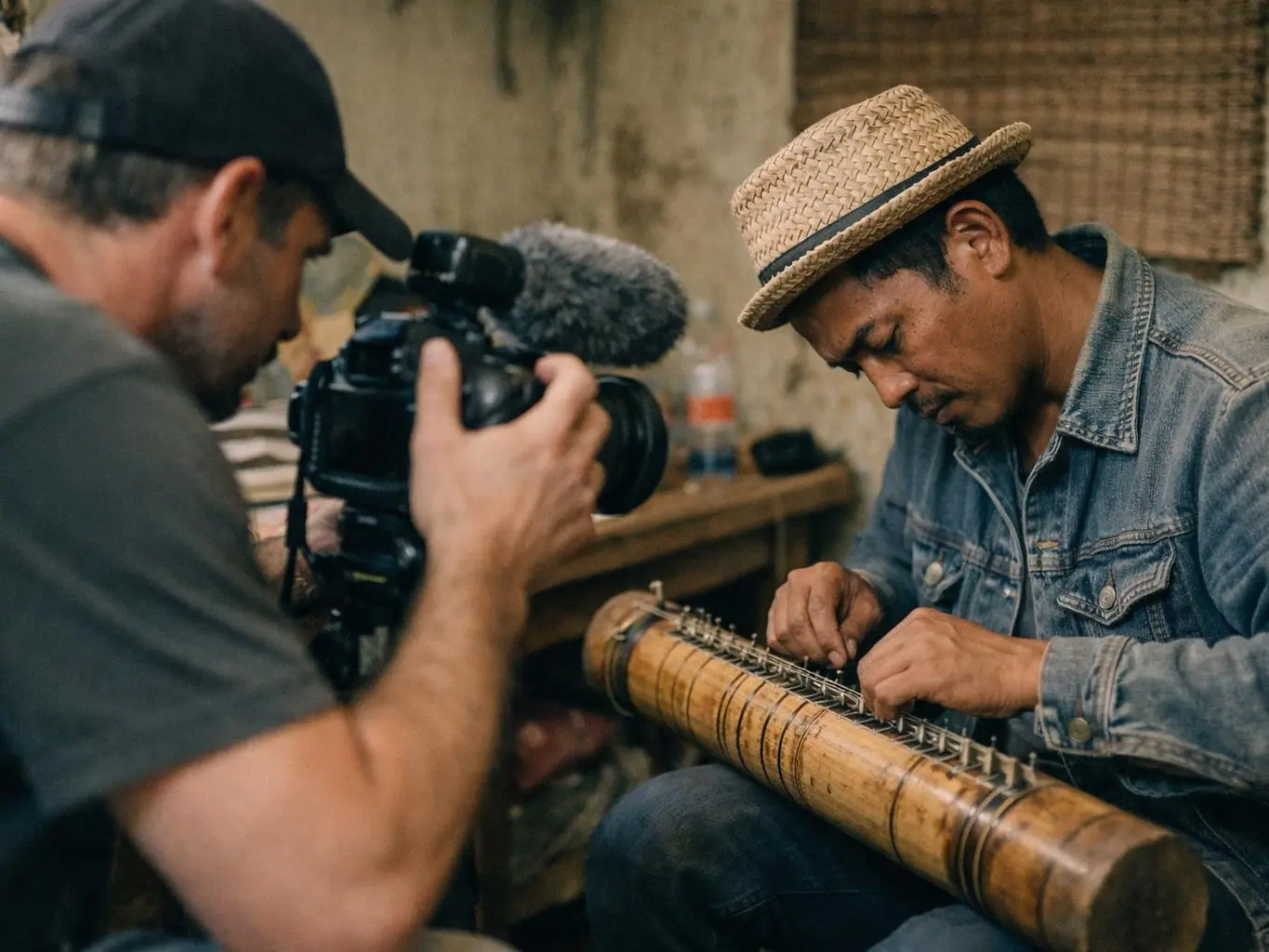
During a documentary shoot in Antananarivo, a filmmaker uses three-point lighting to film an interview with a local artisan. The key light highlights the artisan’s face, the fill light softens shadows from the bright midday sun.
Cinematographer is the creative and technical professional responsible for capturing a film’s visual style through camera work, lighting. And shot composition. Cinematographers collaborate with directors to translate scripts into compelling images, ensuring each frame supports the story’s mood, tone. And narrative. Their decisions influence color, movement, depth.
Color grading is the process of adjusting and enhancing the color, contrast. And overall visual tone of film or video footage in post-production. Color grading refines raw footage to achieve a consistent look, evoke emotions.
Depth of field is the range of distance in a scene that appears acceptably sharp in a photograph or film frame. It determines how much of the foreground, subject.
Film commissions are groups backed by governments or non-profits. They help film, TV. And media projects in a place. They give permits, find locations, offer tax breaks. And help with logistics. They also suggest local crews. This brings jobs and tourists to the area.
Gimbal is a motorized mechanical device designed to stabilize cameras, drones. Or other equipment by maintaining a steady, level orientation regardless of movement. Gimbals use sensors and brushless motors to counteract unwanted vibrations, tilts. Or shakes, allowing smooth footage even during dynamic shots like walking, running. Or vehicle mounts. They're essential tools in professional filmmaking, videography.
PRO FIXERS MADAGASCAR
Contact PRO FIXERS MADAGASCAR for practical guidance on Three-point lighting and related film production madagascar work in Madagascar.